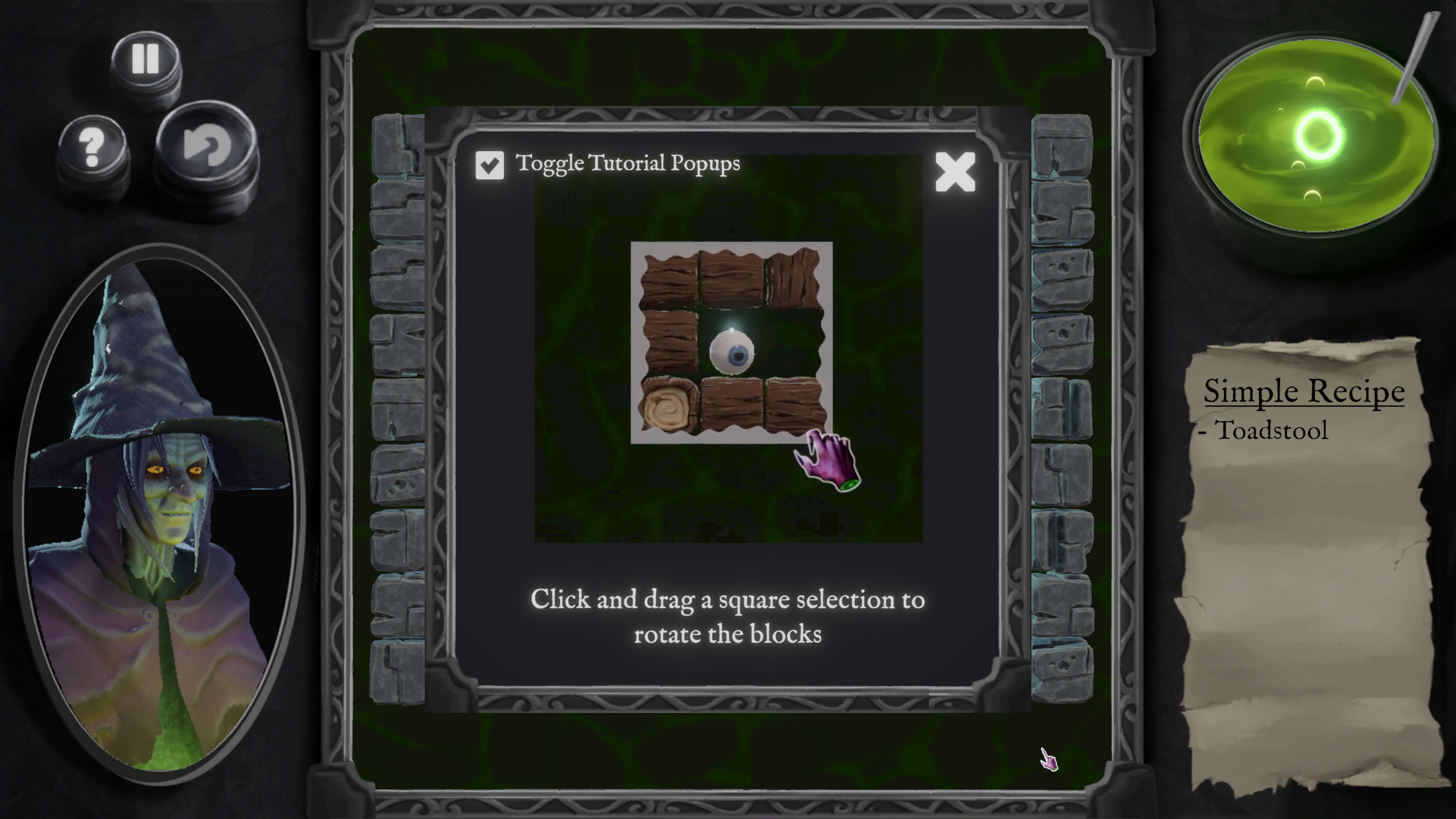
Trickstir is a singleplayer puzzle game where the player selects tiles to rotate them and move around level elements, with the goal of moving ingredients to the witch’s cauldron. This project was made in a small group as part of the Game Design and Development program at Michigan State University.
Ingredient Types
With Trickstir, our main goal was to expand on the mechanics of this rotation puzzle sub-genre as much as we could in the given timeframe because the basic premise of the game was simple and we were already taking direct inspiration from a similar game, Numbskull. The main way this manifested in our game was through creating many different types of ingredients.
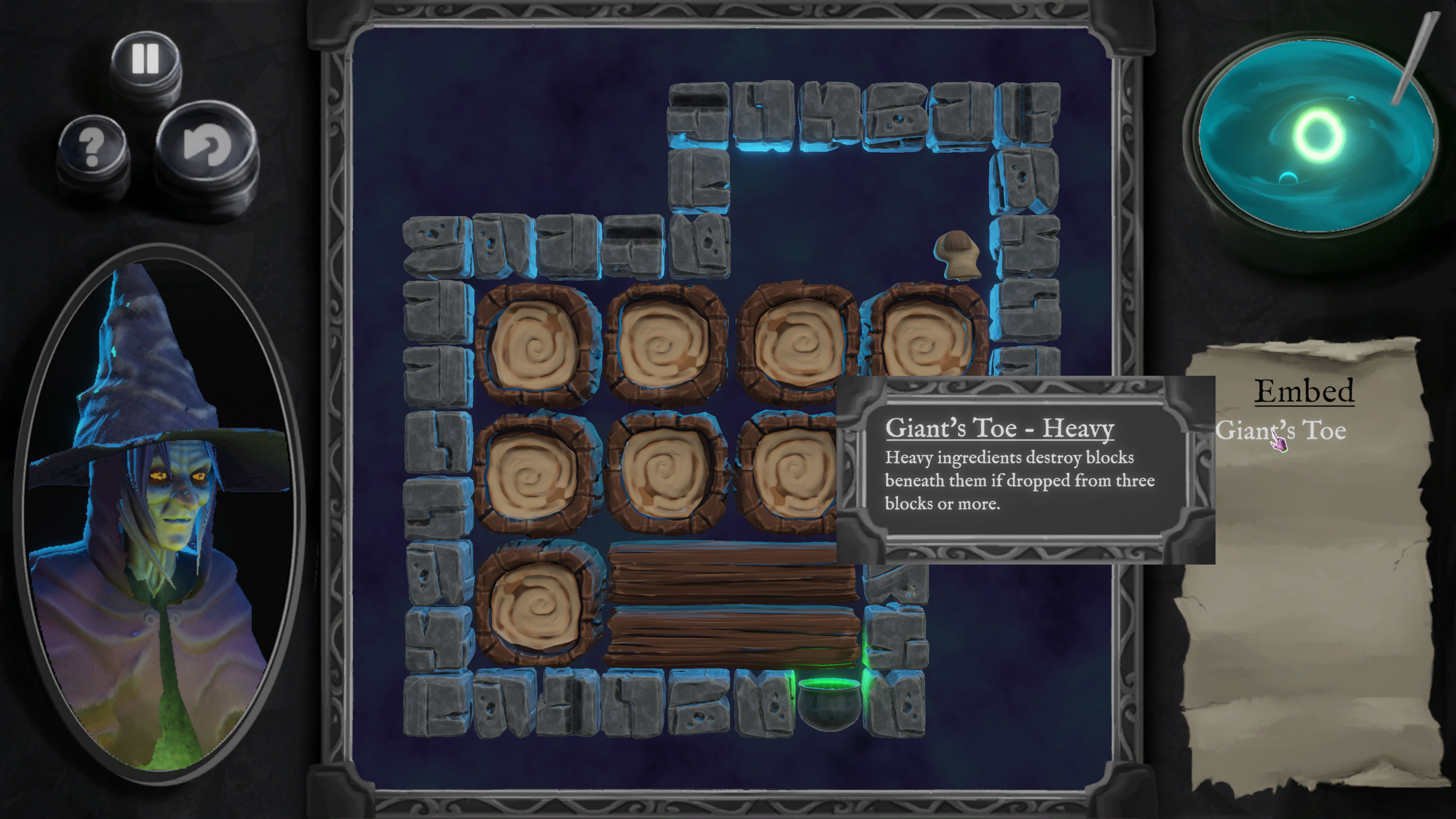
Each ingredient aside from the basic normal one introduces a simple rule that can be explained in just a sentence or two, but can drastically affect how you navigate a level. For example, the fragile ingredient will be destroyed if it drops vertically from too high. That’s literally all there is to it, but now the player must make significant gameplay adjustments as they need to ensure that there’s always a surface closely beneath a fragile ingredient after every rotation.
On top of being able to create interesting gameplay without complicating the game too much, creating these different ingredient types was a very easy thing to integrate into our game’s development. The ingredient mechanics are almost all tied to the ingredients themselves, allowing us to develop the rest of the game very quickly and simply add in the special ingredients and their levels when they were done without needing to go back and modify or rework parts of the core gameplay. An early prototype of Trickstir was available for playtesting with other people within two weeks of the project starting because the game could be functional and representative of the final version without requiring these new mechanics to also be already done.
Gameplay Tutorials
One of the key components we wanted in the final version of the game was tutorial pop-ups that appear whenever a new mechanic, like a special ingredient, appears for the first time. These are quick explanations that, with the assistance of a visual like a short video, the player can grasp within seconds.
On top of simply writing the tutorial blurbs, the design of the mechanics themselves goes together with this kind of tutorial system. The simple-but-significant design of each of this game’s mechanics allows things to be adequately explained in just a sentence or two without the game itself being simple and boring.