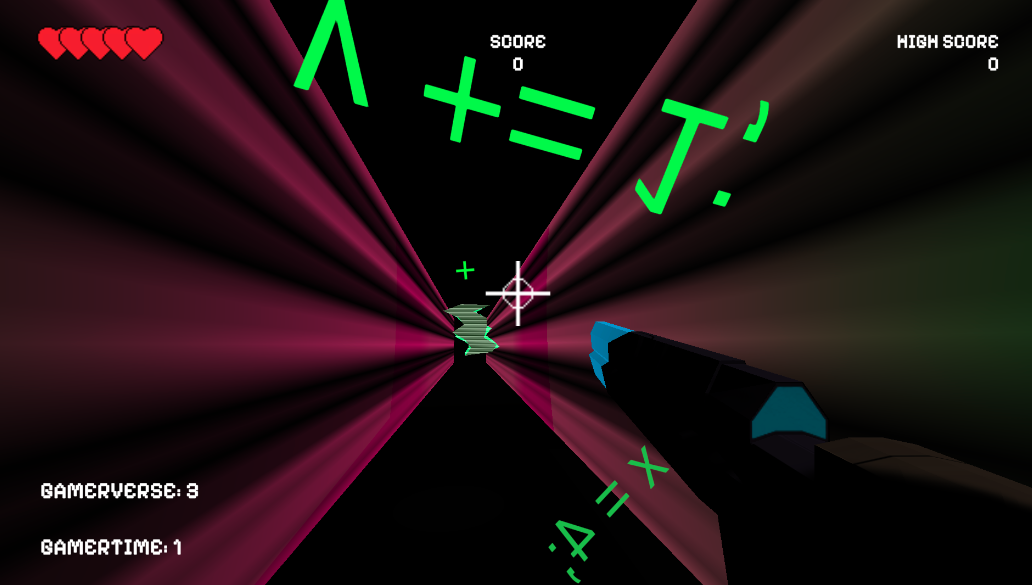
Cyberhazard was made in a game jam held by my university’s game development club. This 3D game puts the player in a zero-gravity environment, complete with zero-g movement. The player is a virus tasked with infiltrating and corrupting a computer by navigating around the arena and destroying the data cores, all while getting past the computer’s antivirus protectors.
Player Abilities
A key design goal was to keep the player moving rapidly as they are constantly being chased by the antivirus enemies. While the player can fight back with their “malware blaster” gun, making sure that the player is always on the move was the objective. To achieve this, we made it easy for the enemies to overpower the player, but the player also has a couple of abilities that have limited uses, encouraging them to pay attention to the enemies and use them when they think they may be overwhelmed.
The first ability started as the ability to move through “firewalls”—shortcuts placed around the arena—that the enemies would need to pathfind around if the player went through. This ability evolved when one of our programmers made some really cool effects for the firewall traversal, making it seem like the player was moving through an alternate universe. We decided to lean into this and rework the ability to be a long-distance teleport in the direction the player is facing where the player bends reality and “enters the gamerverse” to quickly traverse the distance and get away from enemies. The other ability, gamertime, is like an opposite of the gamerverse. This ability allows the player to slow the game down to bullet-time, giving them a moment to take in what is happening in the fast-paced environment and react to incoming enemies.
Level Design
Another design goal I wanted to accomplish was to design the level such that it would be disorienting at first glance, but would be able to be navigated by someone if they paid attention. The reason for making the arena disorienting was two-fold: it would support the aesthetic and vibe we were going for with the game, but it would also combine with the fast-paced nature of the game to give the player a challenge in finding the data cores despite the level being very open and not at all like a maze, which was necessary in order to let the player feel like they’re moving around very fast.
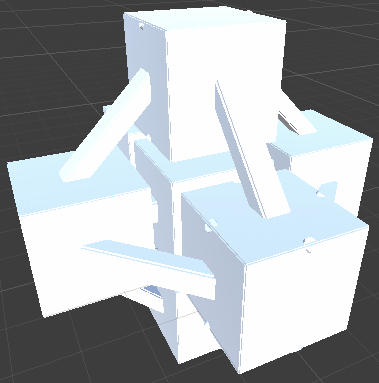
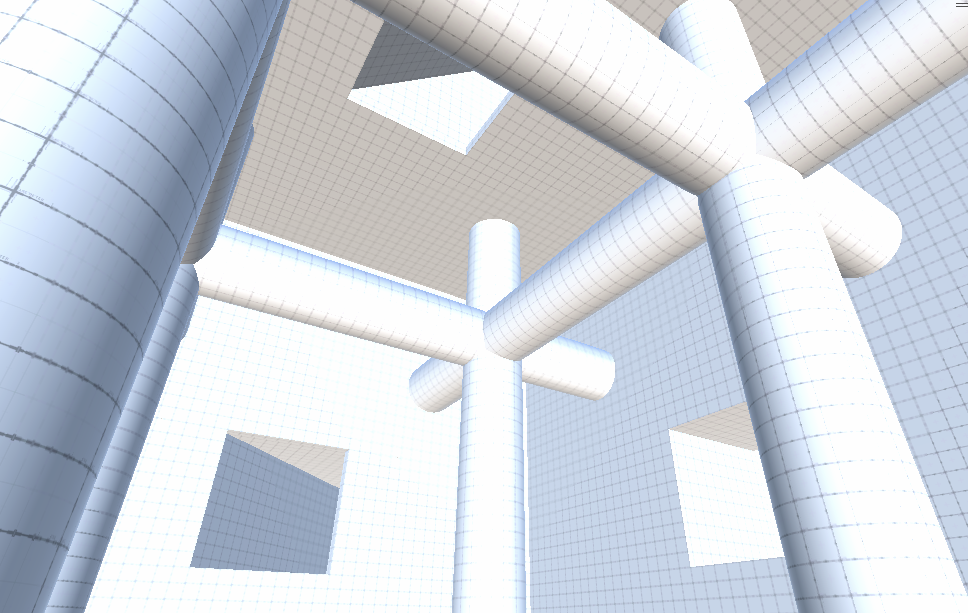
The solution I came up with was to build the outer shell of the arena to make everything appear to look the same. The level consists of many different rooms, but they are all the same shape and size, and they are organized in a way such that the level is symmetrical on all axes. However, the interiors of each room feature some obstacles that are arranged differently in each room. The obstacles themselves may also look the same, but the player can determine what room they’re in by noticing how they are arranged. This ended up not only solving the given design challenge, but also providing me with some objects to “hide” the data cores behind, so that they wouldn’t just be sitting out in open space for the player to quickly see when glancing around a room.